
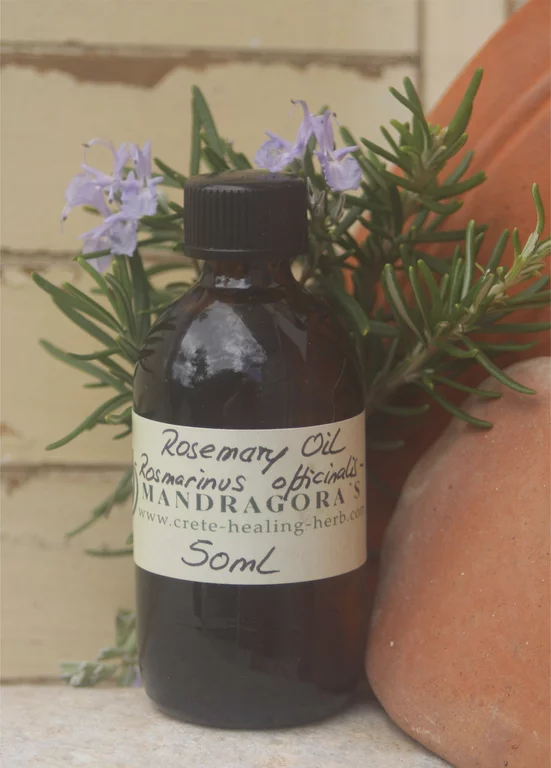

Rosemary has a stimulating, clarifying, and structuring effect. It brings movement to stagnation, warmth to coldness, and freshness to tired processes.
Even in antiquity, rosemary
was regarded as a plant of mental alertness.
The ancient Greeks wore
rosemary wreaths while studying.
It was said:
“Rosemary
strengthens the memory and awakens the mind.”
In skincare, this quality appears as an activating and toning force: rosemary oil invigorates skin and scalp, promotes circulation, and supports clear, awake skin functions.
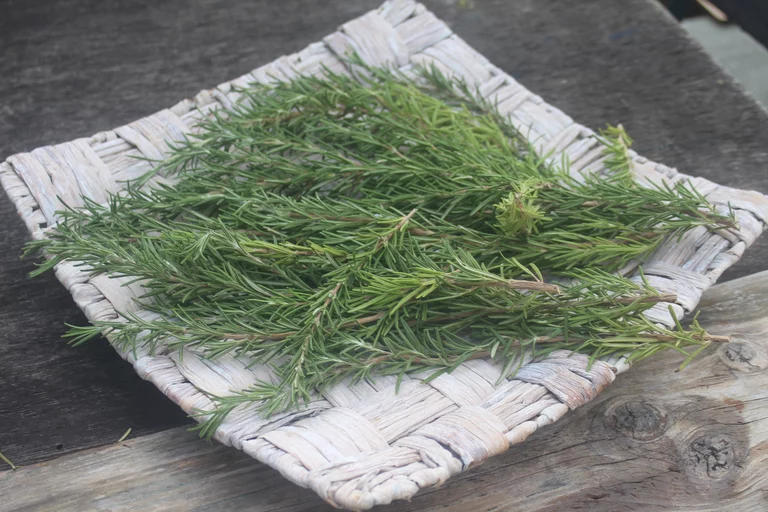


No.O20
Effects & benefits for skin & hair
Rosemary oil stimulates microcirculation in order to:
revitalize tired, poorly perfused skin
support the nourishment of skin and hair roots
relieve feelings of tension
Especially suitable for dull, cool, or sluggish skin.
Antioxidant & protective
The plant compounds it
contains – especially rosmarinic acid and
carnosic acid –
have antioxidant effects and
help protect the skin from free radicals.
This supports skin
regeneration, protection against premature
skin aging,
and stabilization of
the skin barrier.
Rosemary oil works:
mildly astringent
clarifying for blemished or large-pored skin
balancing for oily or imbalanced scalp
It helps the skin to organize and regulate itself.
Scalp & hair care
Rosemary oil is traditionally used for:
activation of the scalp
promotion of blood circulation to the hair roots
support of hair growth
improvement of scalp balance (e.g. dandruff or itching)
It gives the hair strength, freshness, and resilience.
Constituents (skin-relevant)
Essential oils
1,8-Cineole (eucalyptol) – clarifying, circulation-promoting
Camphor – activating, warming
α-Pinene – cleansing, invigorating
Borneol & bornyl acetate – balancing, regeneration-supporting
Limonene & camphene – refreshing, toning
Other active plant compounds
Rosmarinic acid, carnosic acid, carnosol – antioxidant, anti-inflammatory
Flavonoids – protective, stabilizing
Tannins – mildly astringent, clarifying
Bitter compounds & diterpenes – regulating, activating
This combination makes rosemary oil a concentrated activating oil for skin and scalp.
Use in skin & hair care (external)
Facial & body care
Mix 1 tablespoon of
rosemary oil, optionally with a little jojoba
oil,
and massage gently into the
skin.
Suitable for:
tired, dull skin; cool skin types
invigorating body oils
muscle and activation oils
Scalp & hair oil
massage into the scalp
leave on for 30–60 minutes or overnight, then wash out
With regular use, it supports a vital scalp and strong hair.
Invigorating rub
As a morning or activation
oil, foot or hand oil,
or massage oil for example
in cases of fatigue and exhaustion.
ROS-MARIN – the “dew of the sea” herb?
The name literally
means:
ros marinus= dew of
the sea
Because it grew along the coasts and in the morning shimmered with sea dew, as if coated with fine silver.
A small rosemary story
“The Wreath of Vigilance”
In a small Greek village,
people used to say that rosemary was the “god of
remembrance.”
Each year, during learning
celebrations, children tied small rosemary sprigs around their
heads before studying new lessons.
It was said that whoever
inhaled the scent would forget nothing – neither poems nor
stories.
The old monks of the region also used rosemary to cleanse their herb chambers. The scent was believed to drive away dark thoughts and bring clarity to the mind.Since then, rosemary has been considered a plant of memory, courage, and inner clarity.
Where does rosemary come from?
Origin:
Mediterranean region –
especially dry, rocky, sunlit coastal areas.It loves heat and
sun, thrives in poor soils, and tolerates salty air.
Stories & myths about rosemary
The mermaid
legend
An old tale says: "When
mermaids came ashore,rosemary was the first plant they
loved,
because it smelled of the
sea, of salt, of home.That is why it was given the name “dew of
the sea.”
Queen Isabella of
Hungary
In the Middle Ages, a famous
distillate was created:Hungary Water(Eau
de la Reine de Hongrie), a blend of rosemary and
alcohol.
Legend tells that the
70-year-old Queen Isabella was gravely ill. A hermit gave her a
rosemary elixir. She regained her health, vitality, and joy for
life.
The King of Poland wished to
marry her – because she appeared “so young.”
Rosemary as a
protective herb
In many countries, rosemary
was braided into hair, hung in homes, and carried at
weddings.
It was believed to ward off
evil spirits, strengthen love, bring clarity, preserve memory,
and bestow courage
Above all, to eat a healthy diet, engage in sports, enjoy daily
movement outdoors in nature, and drink clean water. However, in
today’s world it is often not possible to follow all of these
essential principles of life regularly or long-term. In
addition, stress levels are widely high, and exposure to
environmental factors, chemicals, toxins, pesticides, and much
more has increased.
An essence from the wonderful natural world can not only
provide us with valuable vitamins, minerals, and feelings of
happiness: when used correctly, it offers remarkably efficient,
side-effect-free support, both preventively and reactively. ✔️
