
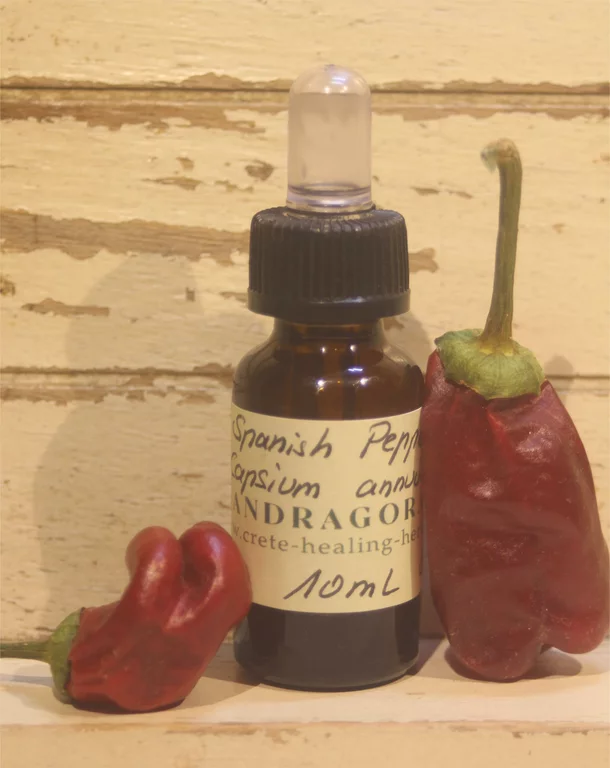

Spanish pepper belongs to
the plants of warmth, circulation, and activation.
It works where cold,
stagnation, and sluggishness are present – physically as well
as energetically.
Capsicum was already highly
valued in the cultures of Central and South
America.
After its introduction to
Europe, it quickly found its way into folk medicine, monastic
medicine, and the kitchen.
Its independent use across
different cultures speaks for a clear and reliable
effect.
No.67
Applications
Promotes circulation
Cold sensations, cold hands and feet
Sluggish digestion
Muscle and joint discomfort (external use)
Stimulation of circulation and metabolism
Activation in states of fatigue and inner stagnation
Internal use
As a spice to stimulate digestion and appetite
Tincture in very low dosage
Warming addition to heavy or cooling foods
External use
Rubs for muscle tension
Warming salves for joint discomfort
Activating compresses (e.g. for cold sensations)
Constituents of Spanish pepper
Capsaicinoids (especially capsaicin)
Flavonoids
Carotenoids
Essential oils
Vitamin C
Vitamin A (beta-carotene)
Minerals (potassium, magnesium)
Spanish Pepper Tincture – usage
Acute
conditions
e.g. cold sensations, poor
circulation, sluggish digestion:
Dosage: 1–3
drops, 1–2 times daily, well diluted in water or tea.
As a course /
activating support
e.g. gentle stimulation of
circulation and metabolism:
Dosage: 1–2
drops once daily, well diluted.
A course should last no longer than 2 weeks, followed by a break.
(passed down from Central and South American storytelling traditions)
In the ancient cultures of
Central America, chili pepper was not seen merely as
food,
but as a gift from the
sun.
It was said that one day the
sun noticed how
sluggish the people had become:
their blood flowed slowly,
their hearts felt heavy and they had forgotten what it felt like
to be truly alive.
So the sun sent a piece of its fire down to Earth. Not as a flame – but hidden within a fruit.
It was meant to be
small, so it would
not be feared.
Bright, so it could be
recognized. Hot, so
it would be respected.
Those who ate it, the story goes, would once again feel warmth in their belly, movement in their blood and courage in their heart.
But there was a warning: those who took it without respect would feel the fire not as strength, but as pain.
It was said: “The pepper shows you where your limit lies – and whether you are ready to cross it.”
That is why it was given to travelers, used in times of cold and exhaustion and applied during ritual transitions.
When the Pepper Came to Europe
When Spanish seafarers
brought the plant to Europe in the 15th century,
it was not first regarded as
a spice,
but as a medicine against
cold, weakness and
“inner rigidity.”
In monasteries, it was called: “Ignis interior” – the inner fire
It was used to awaken vital life force.
Above all, to eat a healthy diet, engage in sports, enjoy daily movement outdoors in nature, and drink clean water. However, in today’s world it is often not possible to follow all of these essential principles of life regularly or long-term. In addition, stress levels are widely high, and exposure to environmental factors, chemicals, toxins, pesticides, and much more has increased.
An essence from the wonderful natural world can not only provide us with valuable vitamins, minerals, and feelings of happiness: when used correctly, it offers remarkably efficient, side-effect free support, both preventively and reactively. ✔️
